
Chive Butter
Is your garden overrun with chives? Did you buy too many at the farmers Market because they just looked SO good? You know what that means. Now you have to use them up before they go bad. Don‘t worry, I’ve got a recipe for Chive Butter coming to your rescue! Not only will I show you how to make this easy compound butter, but I’ll give you a few ideas for how to use it!
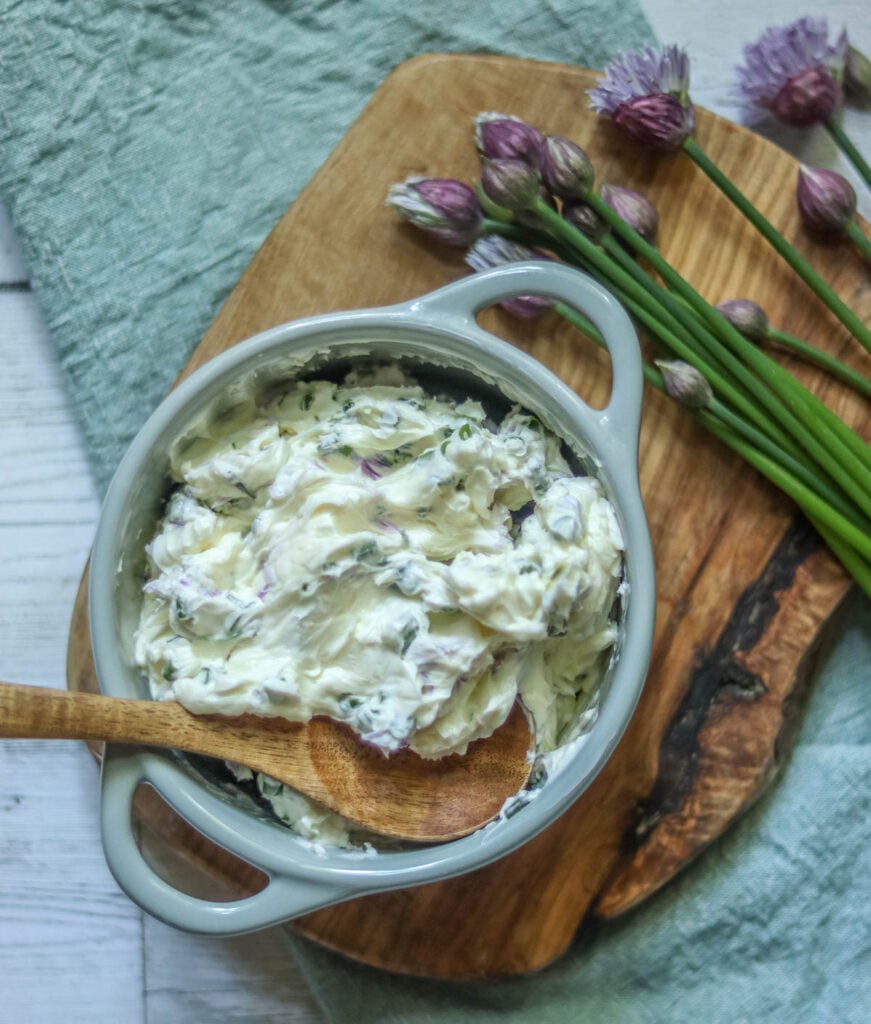
Chive butter is one of those simple things I like to keep around in the Springtime, which is easy to do because I grow chives in my garden every year. I love creating dishes with fresh items like this one to share with you.
I know you must be thinking “this is just butter and fresh chives” and yes you’re right, to a point. But I want to go further in this recipe than just that and talk about ways to make this chive compound butter something you’ll reach for in your refrigerator over and over, until it becomes a Spring staple in your kitchen. If you’ve visited the site before, you may have tried my Garlic Scape Butter, which I love in the Summer.
I’ve been fortunate enough to take buttermaking classes, and that means I’ve made my own butter! I’ll be going over a few pro tips I’ve found in my experience making compound butter and working with fresh herbs so that this recipe becomes something you come back to often. I’ll also talk about freezing your chive butter so that you can use it months after chive season is over!
The Best Butter For Chive Butter
When making compound butter, it’s so important to use really good butter. This is not the time for the cheap off brand stuff. You want cultured butter for this recipe if you can find it. What is cultured butter? Cultured butter is a fermented butter, and it contains live cultures that are added to the cream before churning it. This gives the butter a very slight tang (less tangy than yogurt or buttermilk, but just enough to know it’s there).
This results in butter with a more complex flavor profile and a higher fat content, all of which mean a super awesome compound butter you’ll love. I want to make it clear that if you can’t find cultured butter, this recipe is still going to be great. Just buy good quality sweet cream butter.
In your local market, you’ll see this type of butter labelled as Cultured Butter, or European Style. Sometimes you’ll see both on the label. This type of butter is often grass fed, which gives it more of a yellow color than sweet cream butter. Take a look at my tips below for more info on salt.
Selecting The Best Fresh Chives
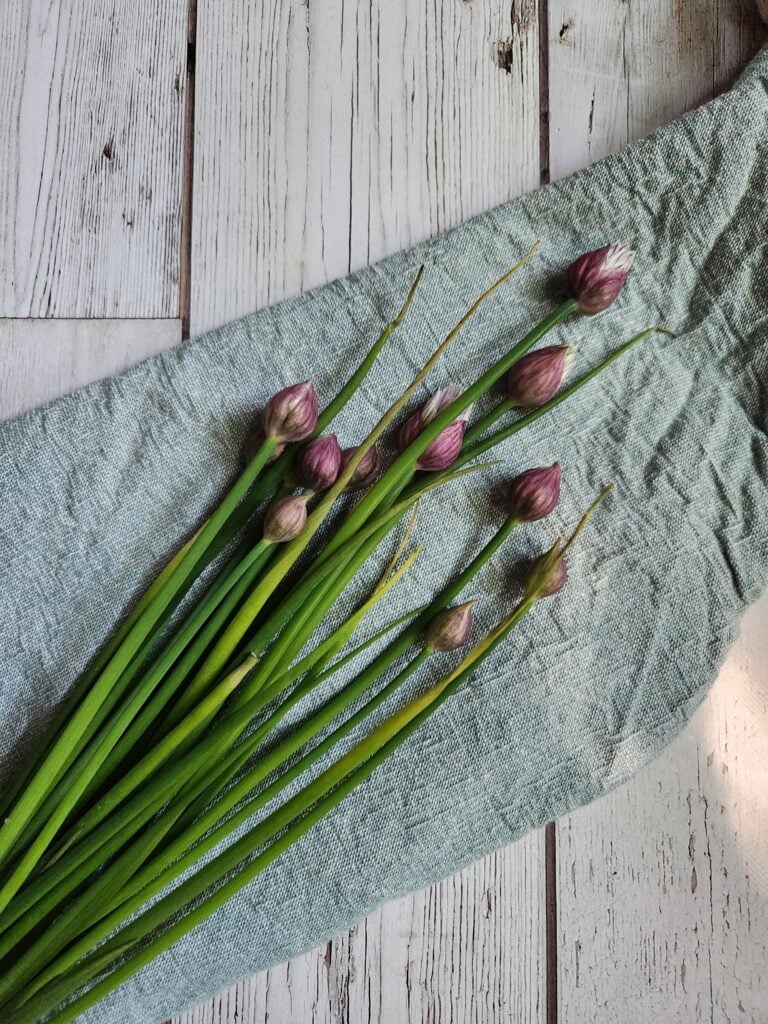
Chives are synonymous with early Spring, as they are one of the first herbs to appear. Whether you are picking them from your garden or buying from the Farmers Market (the best place to buy them if you don’t grow them), you want chives that are not wilting or browning, or that are soggy. They should be slightly stiff when gripping them in your hand, similar to scallions.
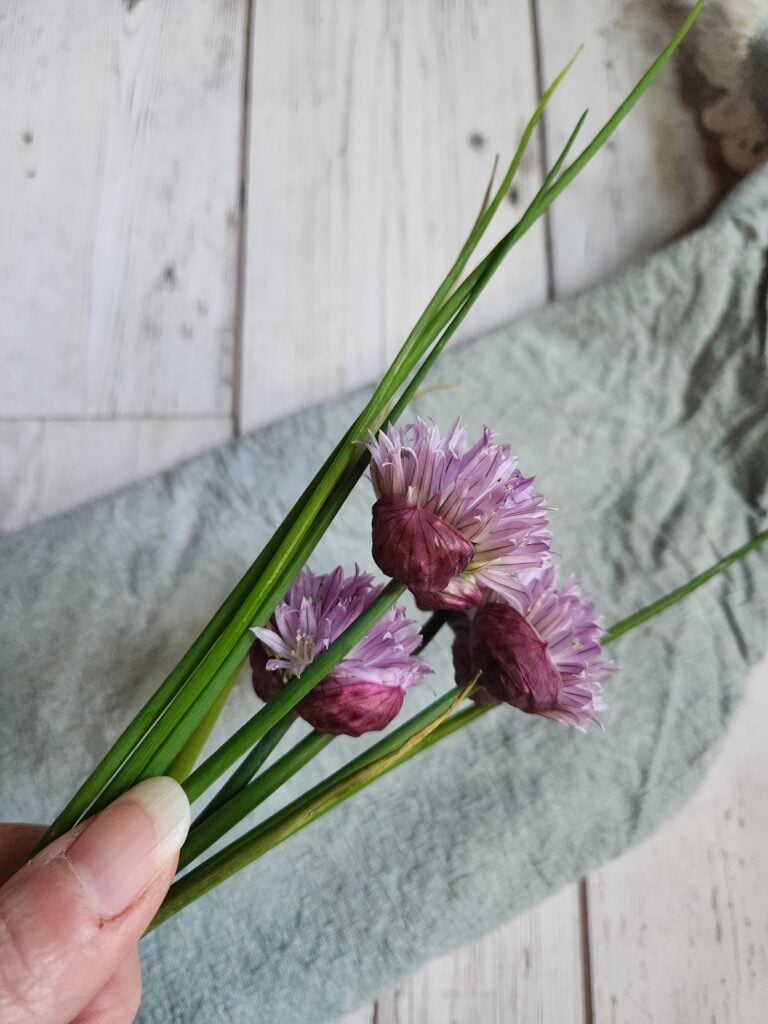
If you buy them at the Farmers Market or harvest them in your garden, you will likely have chive blossoms. Do not throw them away! We are adding them to the butter! They are edible, and they lend color and their own mild onion flavor to this butter. I also use chive flowers in this strawberry vinaigrette.
When harvesting them from your garden don’t try to uproot them or break them off. Just trim them with scissors or garden shears an inch or two from the soil.
At the Farmers Market, you’ll find the chives in a glass of water, flower end up. This is also how you should store them in your kitchen until ready to use. Just store them in your refrigerator in the cup of water, and change the water every day or two. Don’t wash them until ready to use, this helps prevent them from spoiling faster.
Chives will have a slight onion flavor to them, but much milder. Even more mild than scallions.

Chives should be green and not feel mushy. The flowers have a mild onion flavor.
Amy’s Compound Butter Tips and Tricks
- You might think I’m crazy, but I like using scissors to cut chives. I find that even a sharp knife can bruise them if I’m not careful.
- The flowers can be cut, or you can just crush them a bit between your fingers.
- Make sure your butter is softened, not melted (see recipe instructions for more tips on this).
- If you are using unsalted butter and want to add your own salt, I recommend course ground sea salt. See recipe notes for adding salt to the chive butter.
See recipe notes for butter softening tips. The butter should be soft and pliable, not melted.
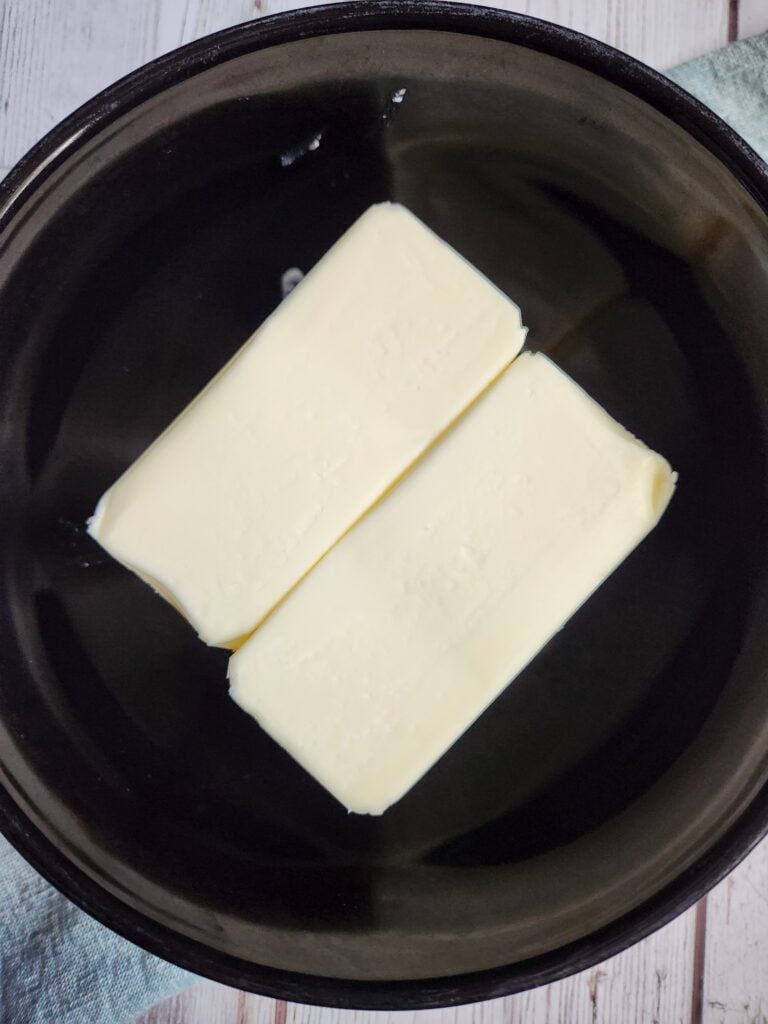
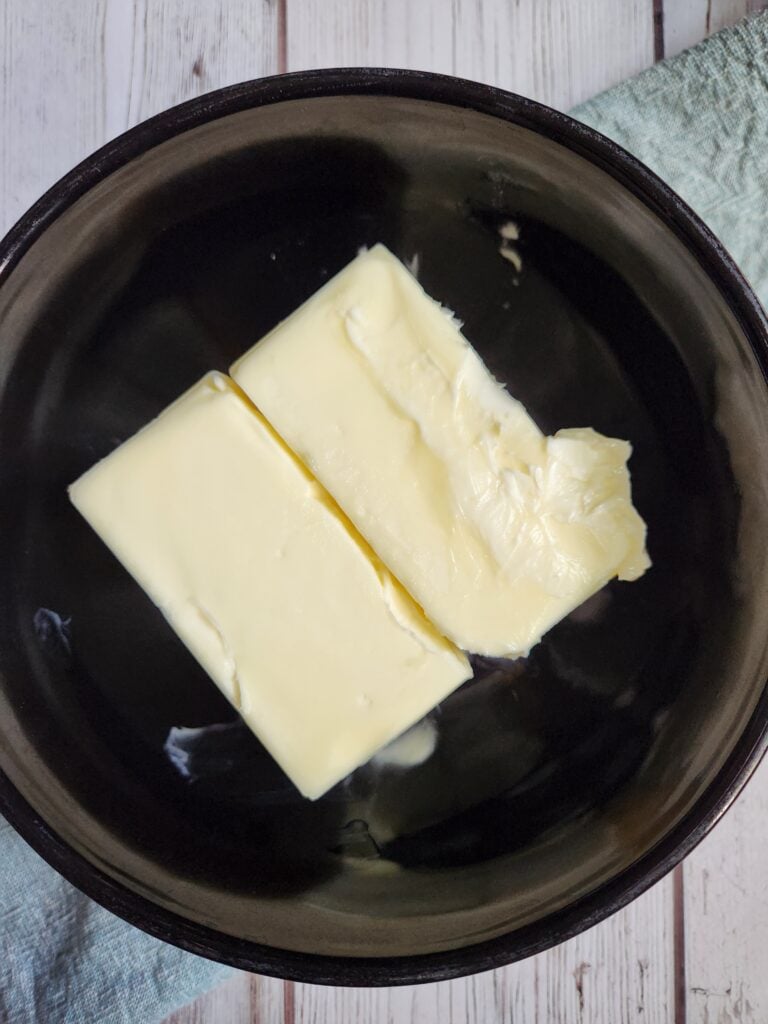
Chop the chives and flowers. Chive blossoms are tasty! Add salt to the butter. Add the chives and chive flowers.


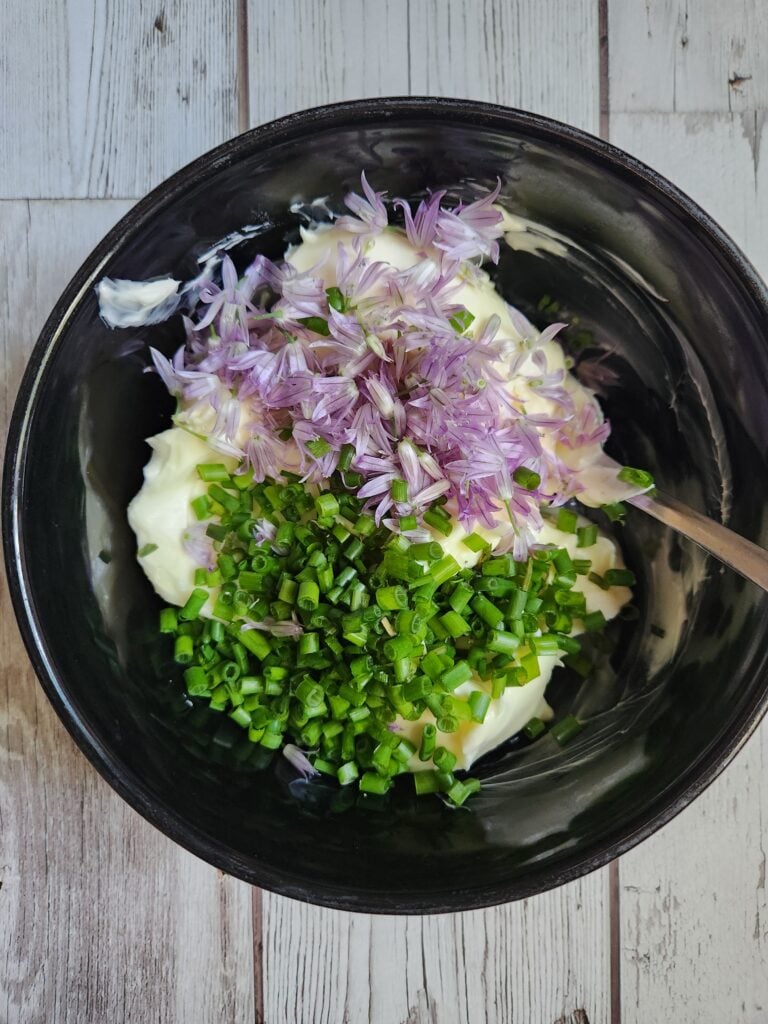
Be sure to check out the full recipe instructions below for the best tips and other advice.
Amy’s Ideas For Using Chive Butter
Do yourself a favor and use this on pretty much everything! Don’t limit yourself to spreading it on bread. Here are some of my favorite ways to use chive butter that I think you’ll love too:
Toss into pasta, stir into risotto, use it instead of plain butter in my pesto butter baked salmon, melt over roasted carrots, stir into mashed potatoes or roasted potatoes, use it as a baked potato topping, the list goes on!
For storage and freezing tips, see the recipe card notes.
I’m so glad you stopped by! If you want more seasonal, scratch-made recipes like this, then be sure to join my email list and get ideas for seasonal home cooking you’ll love. Happy Cooking!
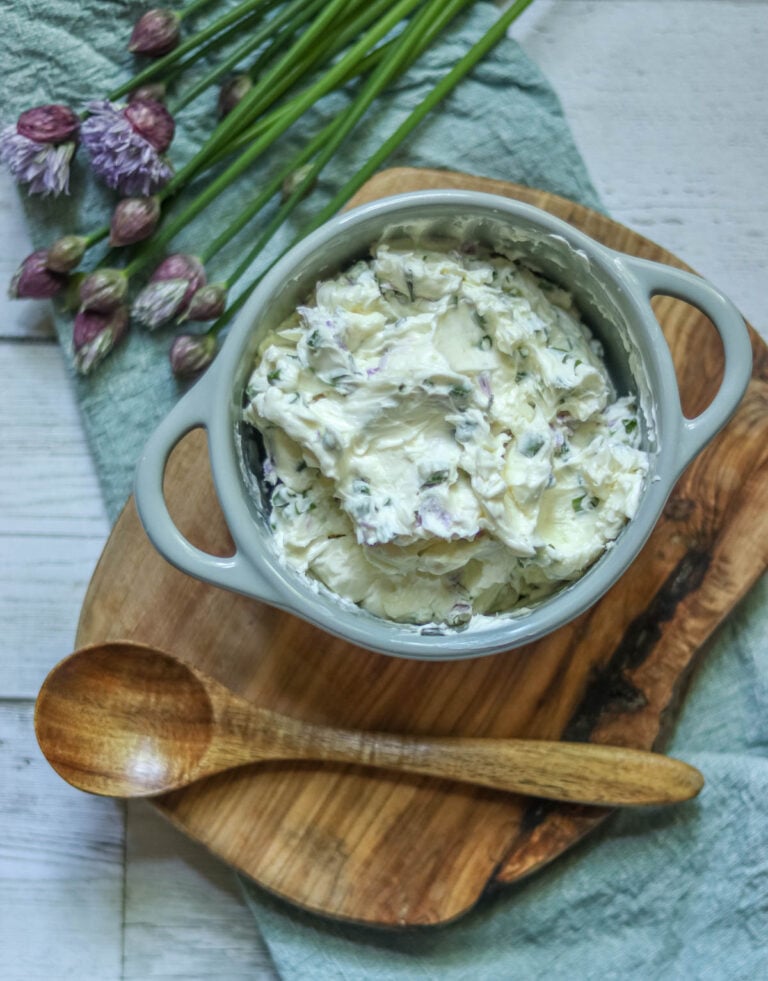
Chive Butter
Once you try homemade chive butter, you’ll want to use it on everything. This easy recipe brings lots of flavor with little effort!
- Total Time: 5 minutes
- Yield: 1 Cup 1x
Ingredients
2 sticks of butter (preferably cultured or grass fed, salted or unsalted, see notes)
1 1/2 teaspoons of Course Ground Sea Salt (see notes)
1/3 cup of chopped Fresh Chives
1/4 cup of chopped Chive Flowers
Instructions
- Soften two sticks of butter. See notes for different methods.
- Add 1 1/2 teaspoons of salt if you are NOT using salted butter. If you are using unsalted butter then you can skip the salt.
- Stir the salt into the butter until well combined.
- Use scissors or a sharp knife to cut the chives until you have about 1/3 cup. You’ll need 1-2 bunches of chives.
- Chop the chive blossoms, or break them up with your hands until you have about 1/4 cup.
- Add the chopped chives and chive blossoms to the softened butter and stir until well incorporated. Use your favorite way! See the blog post for suggestions above.
Notes
Salting The Chive Butter
Course ground sea salt is best, and you don’t need it unless you’re using unsalted butter. In fact, you can make this without salt if you like, just be sure to use salt in whatever dish you are using the butter in.
Freezing and Storing Chive Butter
You can freeze your chive butter by rolling it into logs and wrapping in parchment and putting in a freezer bag. It will keep for up to 6 months.
If you want individual portions, you can also press it into an ice cube tray and let it freeze, then store the frozen cubes in a freezer bag for up to 6 months.
Softening Butter
You can soften your butter in the microwave in a microwave safe bowl but you should only do it for a few seconds at a time. We are only softening the butter, not melting it.
Another way to soften it is to pour boiling water into a jar or glass, pour the water out and place the hot glass or jar upside down over the butter. This will soften it in about 5 to 10 minutes.
If your kitchen or house is warm, you can also just leave it out on the counter until soft!
- Prep Time: 5 minutes
- Category: Sauces and Condiments
Nutrition
- Serving Size: 1 Tablespoon
- Calories: 102
- Sugar: 0 g
- Sodium: 219.6 mg
- Fat: 11.5 g
- Carbohydrates: 0.1 g
- Protein: 0.2 g
- Cholesterol: 30.4 mg



What a good idea! I always forget them until they dry out. Merci!
You are so welcome! I love finding ways to use up everything so it doesn’t go to waste.
This is such a simple but great idea! Thank you for the tips and tricks.
You are most welcome. I hope you love this recipe!